

🛡️ Article 6: You Can't Stop Every Accident — But You Can Stop the Ones That Are Killing Your Fleet
Prevention isn't a policy. It's a system. And most fleets in New Zealand and Australia don't have one.
In my last article I made the case that the road is the hardest workplace risk to control — and the most expensive when things go wrong. Vehicle incidents account for 42% of all worker fatalities in Australia and one in four work vehicles in New Zealand is involved in some kind of accident every single year.
That's not a statistic you can safety-brief your way out of.
But here's what the data also shows: fleets that build connected, intelligent systems around their drivers — not just rules and reminders — are seeing meaningful, measurable reductions in both accident frequency and cost. The gap between them and everyone else is widening.
So what does best practice actually look like in 2026?

Start With the Three Factors That Cause Most Incidents
Research consistently identifies the same trio behind work-related driving accidents: fatigue, time pressure, and distraction.
Not inexperience. Not poor roads. Not bad weather.
Those factors exist for every driver. What separates high-incident fleets from low-incident ones is whether the organisation has actively addressed these three root causes — or simply hoped the problem would manage itself.
Fatigue is endemic in fleet operations. Long runs, early starts, tight turnaround windows, and insufficient recovery time are baked into many operational models. Fatigue management policies that live in a handbook but don't connect to scheduling and dispatch decisions are effectively decorative.
Time pressure is often management-created. Drivers who feel they're being measured purely on arrival time or job completion rates will speed, skip stops, and take risks. The incentive structure has to change before behaviour does - and bad things happen.
Distraction is the modern accelerant. Over half of business drivers regularly use a phone while driving. In-cab technology, if poorly implemented, adds to the problem rather than solving it.
Fix the system that creates these conditions. Don't just warn people about them.
The Technology That's Actually Moving the Needle
Telematics, dashcams, and driver coaching programmes have been around for years. What's changed is the intelligence behind them — and the fleets using them well are not just collecting data, they're acting on it in real time.
The most effective deployments share a few characteristics:
They catch behaviour before it becomes an incident. Harsh braking events, speeding patterns, phone use alerts, and fatigue indicators give fleet managers something to act on while the driver is still safe. That's a fundamentally different posture from reviewing incident reports after the fact.
They protect the driver as much as the organisation. Dash-cam footage that exonerates a driver from a fraudulent third-party claim isn't just financially valuable — it changes the culture. Drivers who feel the system is on their side engage with it differently than drivers who feel they're being monitored and judged.
They connect to what happens next. A telematics alert that sits in a system nobody checks is worthless. The organisations getting results have closed the loop — from event detection, through coaching, to outcome tracking.
Fleets using this three phase approach consistently report fewer collisions, lower claim costs, and reduced insurance premium escalation. Industry data suggests well-deployed technology can halve accident costs across a fleet.
Inspections: The Missed Intervention Point
Here's a simple one that doesn't get enough attention.
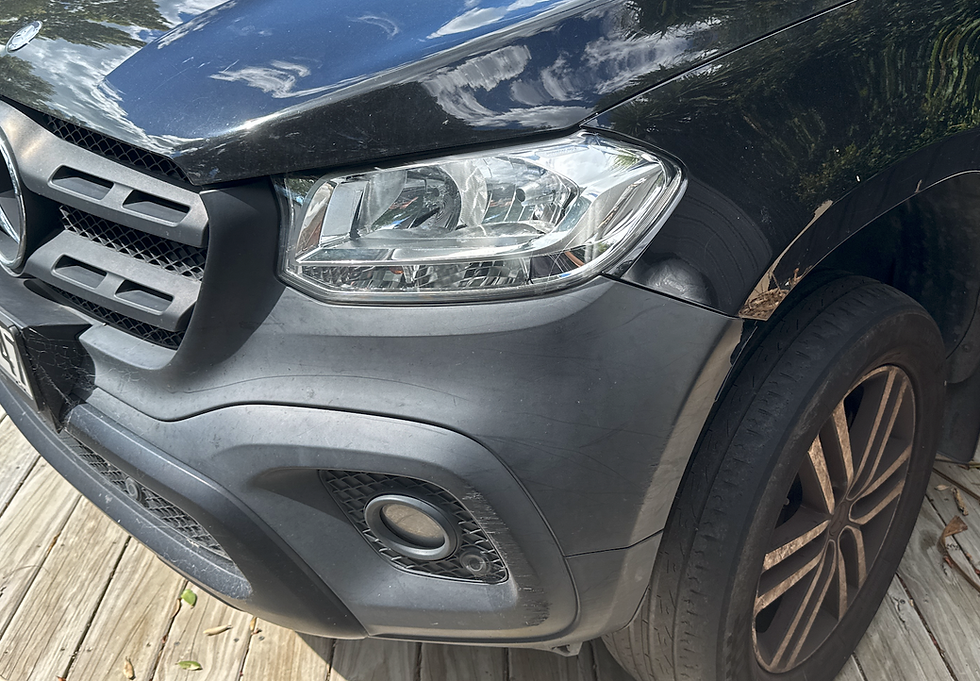
Fatigue and distraction have a tell-tale signature - it shows up around the body of the vehicle with grazed wheels and bumper scrapes, with the odd dent and scratch thrown in for good measure. Regular vehicle condition inspections — done properly — are one of the most underrated prevention tools available to a fleet operator. Not because they catch mechanical faults (though they do). Because the act of inspecting creates accountability.
When drivers know the vehicle will be checked — quickly, consistently, and by a system that doesn't forget — behaviour changes. Minor damage gets reported rather than ignored. Wear and tear gets flagged before it becomes a roadside failure. And the culture of "it wasn't me" begins to erode.
The shift to AI-powered remote inspections has made this practical in a way it simply wasn't before. A guided smartphone inspection completed in minutes, producing a time-stamped, geo-referenced condition report, is now achievable for any fleet of any size. No assessor travel. No scheduling delays. No paperwork - just a smartphone app that guides the user through the series of photos to be recorded.
The technology isn't replacing oversight — it's making consistent oversight possible for the first time.
The Response System Matters as Much as Prevention
Even the best-run fleets have accidents. The question is: what happens in the first 60 minutes?
That window shapes everything — the quality of the evidence, the speed of the claim, the cost of the repair, and the time before the vehicle is back in service. Fleets with a clear, fast, connected response process consistently outperform those that improvise.
Best practice in 2026 looks like this: the moment an incident occurs, the process kicks in automatically. The driver is guided through an immediate scene capture. Damage is documented before the vehicle moves. The right people are notified without a chain of phone calls. The repair pathway is activated and the preparations made in advance mitigate the loss of productivity and cost to the enterprise.
That's not only a vision for a large corporate - it’s achievable right now for a fleet of any size. The fleets that have built this kind of best practice are experiencing shorter cycle times, lower total repair costs, and significantly less administrative burden.
The Honest Conversation About Culture
Technology and process can only take you so far. Ultimately, fleet safety is a leadership issue.
The fleets with the best safety records are led by people who talk about it consistently, measure it visibly, and treat it as a performance indicator — not a compliance exercise. Drivers in those organisations feel accountable not because they fear consequences, but because safety is genuinely part of how the team operates.
That's harder to build than a telematics system. But it's also harder to lose.
What's Coming Next
In my next article, I'll look at the cost and productivity case for modern accident management — what the numbers actually show when you move from reactive to proactive, and how to build the business case internally if you're trying to drive change from within a fleet operation.
If any of this resonates with where your fleet is right now — or where it isn't — I'd welcome the conversation.
---
Peter Adams is the founder of OnRequest Auto IntelliDents — an AI-powered accident management and remote inspection platform for fleet operators across New Zealand and Australia. Learn more at [intellidents.online](https://www.intellidents.online)


Comments